Lake Louise Facilities & Amenities
Are there washrooms at Lake Louise?
Yes, there are washrooms available at Lake Louise, and they are conveniently located for visitors spending time at the lakeshore. A public washroom facility is situated near the main lakeshore area, within easy walking distance of the viewing areas, trailheads, and canoe dock. This makes it practical for short visits as well as longer stays.
Additional washrooms can be found in the nearby Lake Louise village, including around visitor services and commercial areas. These are useful if the lakeshore facilities are busy, especially during peak summer months.
During the main visitor seasons, washrooms are maintained and accessible, though they can become crowded at midday. In winter, facilities remain available but may have reduced capacity or access depending on conditions, so it's best to plan ahead if visiting during colder months.
Is there food available at Lake Louise?
Yes - there are several food options available when you visit Lake Louise, both right at the lakeshore and in the nearby village.
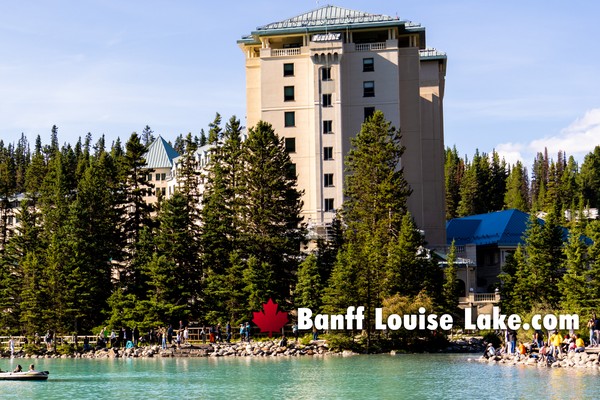
At the lake itself, you'll find casual dining and snacks at establishments near the Fairmont Chateau Lake Louise, including cafes and grab-and-go options that serve sandwiches, soups, pastries, and beverages. These are convenient if you're spending time along the shoreline or arriving early without plans to bring your own food.
In the village of Lake Louise, a short drive or shuttle ride from the lake, there are additional cafes, restaurants, and coffee shops offering a wider range of meals - from breakfast and lunch to more substantial dinners. Grocery and deli-style stops are also available there if you prefer to pack your own picnic for hikes or lakeside relaxation.
If you're planning to hike or spend extended time outdoors, bringing your own snacks and water is still a good idea, since many trails have limited or no food services along the route. Overall, you won't go hungry at Lake Louise, but having a rough plan for meals or snacks will make your visit more comfortable.
Can you stay overnight at Lake Louise?
Yes, you can stay overnight at Lake Louise, and staying in the area offers a very different experience compared to visiting for the day.
The most well-known option is the Fairmont Chateau Lake Louise, which is located directly on the lakeshore. Staying here allows you to experience Lake Louise early in the morning and late in the evening, when day visitors are gone and the area is much quieter. This is especially valuable for photography, winter visits, and relaxed lakeside walks.
Additional accommodations are available in the Lake Louise village, a short drive from the lake. These include hotels and lodges at a range of price points, offering easier access to parking, dining, and services while still being close to the lake and nearby attractions.
Overnight stays are popular year-round, particularly in summer and winter, so booking well in advance is recommended. Staying overnight gives you flexibility, quieter access, and a more immersive Lake Louise experience compared to a short daytime visit.
What amenities are available at the lakeshore?
At the Lake Louise lakeshore, you'll find a cluster of basic amenities designed to support visitors who are spending time enjoying the views and accessing nearby trails. There are public washrooms conveniently located near the main viewing area, so you don't have to walk far from the parking or shuttle drop-off to find facilities. Benches and picnic spaces are scattered along the flat path around the shore, giving people places to rest, snack, or simply soak up the scenery.
Near the lakeshore access point you'll also find a café and snack kiosk where you can purchase quick meals, drinks, and light refreshments without having to leave the area. This is especially useful if you plan to arrive early or stay late and want something more than what you brought yourself.
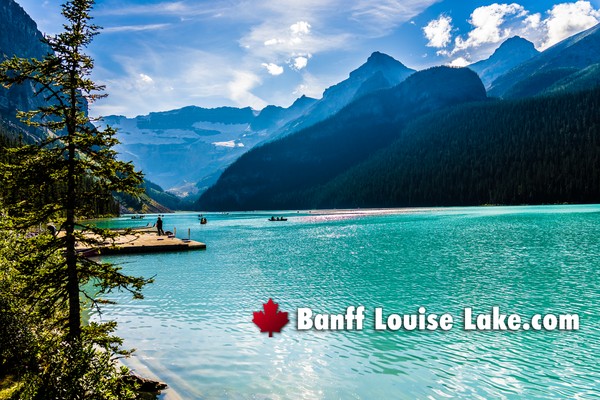
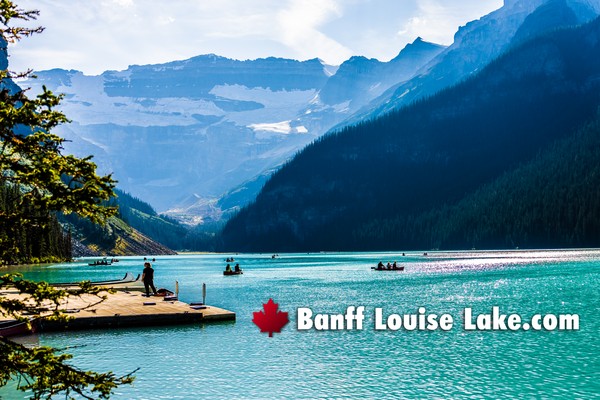
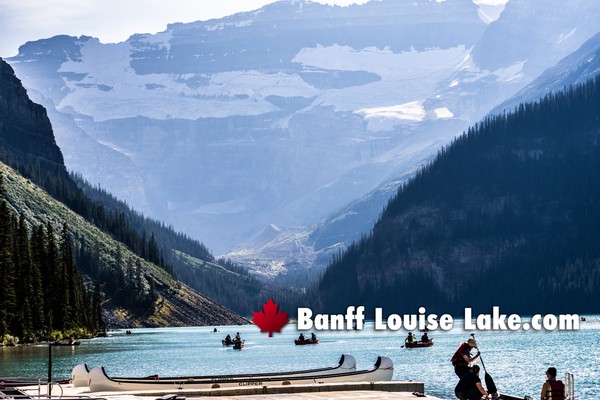
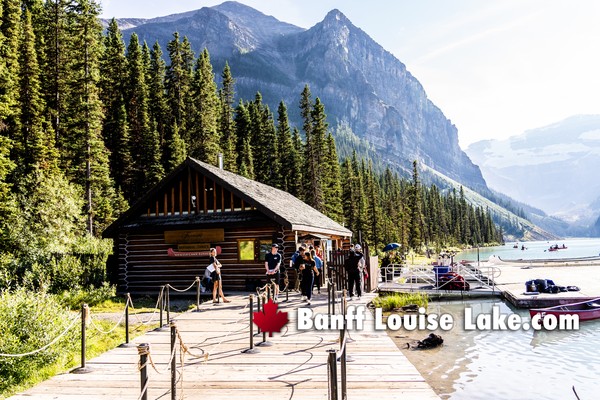
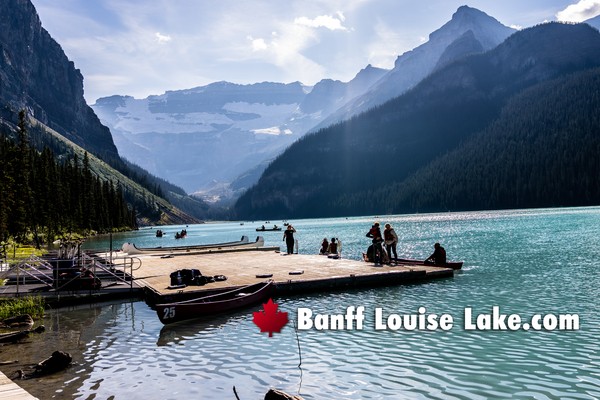
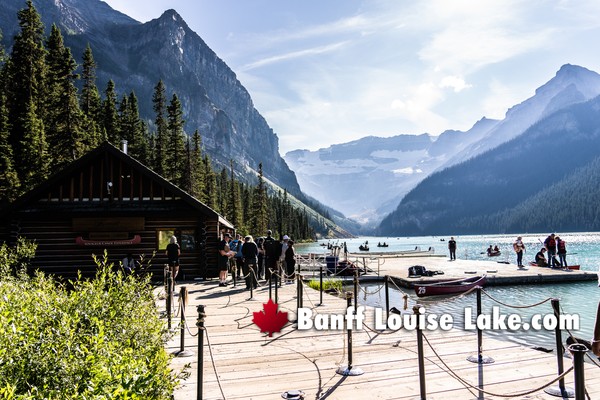
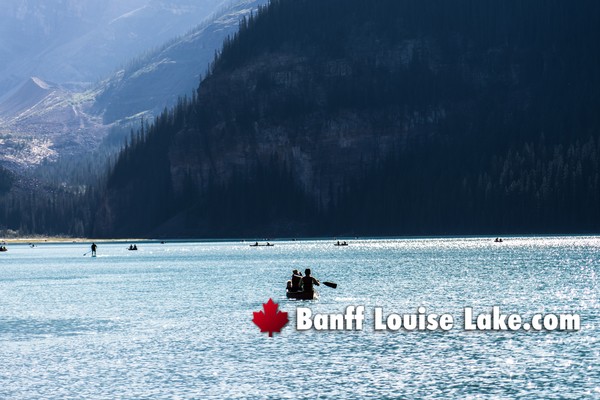
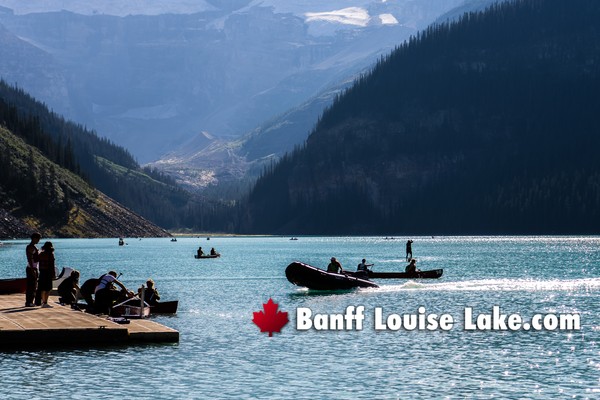
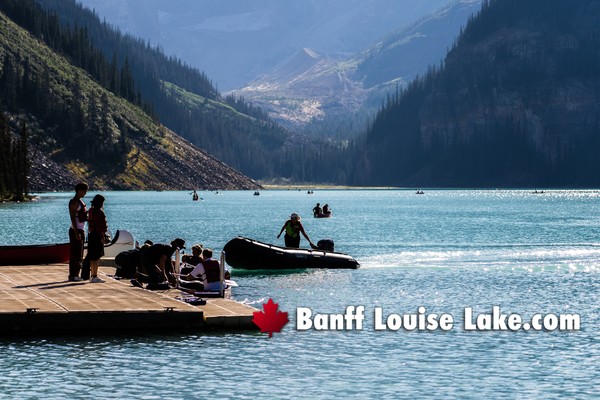
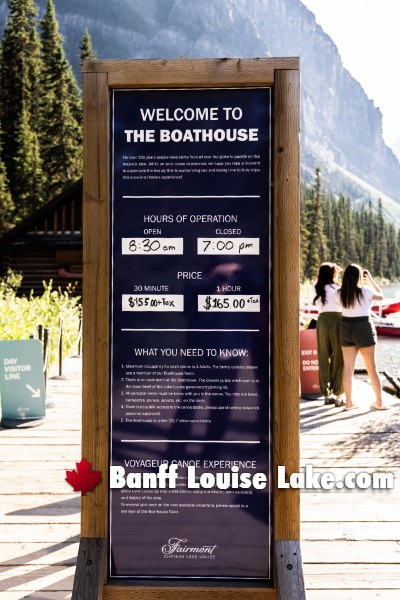
If you're visiting in summer, canoe rentals operate right at the lakeshore, with a dock and staffed boathouse where you can rent a canoe for a short paddle. Water bottle refilling stations and information signs about trails and safety are also present, helping you prepare for hikes or better understand the landscape.
There is no large grocery or full-service restaurant immediately at the lake itself; for those you'll need to go a few minutes into the nearby village. But for essentials - restroom access, snacks, seating, canoeing, and trail information - the lakeshore area has practical amenities to support a comfortable visit.
Lake Louise Accessibility & Rules
Is Lake Louise wheelchair accessible?
Lake Louise has wheelchair-accessible areas, but the level of accessibility varies depending on where you go.
The main lakeshore area and the paved path immediately around the front of the lake are wheelchair-friendly, with relatively smooth surfaces and gentle grades. These sections let people in wheelchairs reach iconic views of the turquoise water and surrounding mountains with minimal difficulty.
Some amenities near the lakeshore - such as washrooms, seating areas, and visitor information - are also designed to be accessible. The route from the parking area or shuttle drop-off to the lakeshore viewing platform tends to be navigable for visitors using wheelchairs or mobility devices.
That said, many of the hiking trails branching off from Lake Louise are not fully wheelchair accessible. Trails like Lake Agnes, Plain of Six Glaciers, and Big Beehive have uneven terrain, roots, rocks, and elevation changes that make them unsuitable for wheelchairs without significant assistance or specialized equipment.
Accessible: Main lakeshore path, viewing areas, some facilities.
Not accessible: Most backcountry hiking trails.
Are dogs allowed at Lake Louise?
No - dogs are not allowed on the Lake Louise lakeshore area, including the main beach, lakeshore paths, and most nearby trails. This restriction is in place to protect wildlife, fragile vegetation, and other visitors' experiences in a high-use natural setting.
Dogs are permitted in some nearby public areas and paved pathways in the Lake Louise village, provided they are kept on a leash and under control. However, once you leave the village and enter park trails or the lakeshore environment itself, dogs are generally prohibited.
If you're planning to bring a dog and want to enjoy the region, you can explore designated trails near the village that allow leashed dogs, or visit nearby parks and forests where dogs are permitted according to local rules. For lakeshore photography, picnicking, or swimming areas at Lake Louise itself, you'll need to make alternate care arrangements for your pet.
Are there restrictions on swimming?
Yes - there are practical and seasonal restrictions on swimming at Lake Louise, even though nothing officially bans people from entering the water.
The lake's water comes from glacial melt, so in most of the year the temperature is extremely cold, usually too chilly for comfortable swimming. Even in summer, the water near the shore tends to stay cold because of ongoing glacier inflow, which means swimming is brief and not recommended for everyone.
In addition, Lake Louise is one of the most heavily visited natural sites in Banff National Park, and Parks Canada manages visitor movement to protect the environment and ensure safety. That means there are no designated supervised swimming areas or lifeguards, and roaming into deeper parts of the lake can be hazardous due to cold shock and rapidly changing conditions.
Most visitors who want a swim choose smaller, nearby lakes with warmer water or visit recreational swimming spots around Banff National Park that offer safer, more comfortable conditions.
In summary: you can technically enter the water, but it's cold and not generally suitable for sustained swimming, and there are no formal beach or lifeguarded areas at Lake Louise itself.
Is Lake Louise suitable for seniors or mobility-limited visitors?
Yes - Lake Louise can be suitable for seniors and mobility-limited visitors, though the experience depends on what you plan to do once you're there.
The lakeshore viewing area itself is the most accessible part of the site. A paved, relatively flat path runs along the front of the lake and provides excellent vantage points of the turquoise water and surrounding mountains. From the parking area or shuttle drop-off, this lakeshore route can be navigated with a wheelchair or mobility aid, and many seniors find it very pleasant for a relaxed walk with minimal elevation change.
Some basic amenities near the lakeshore - such as washrooms and resting spots - are also accessible, helping make short visits more comfortable. If you stay into the evening or arrive very early, the experience is calmer and easier to manage.
However, most of the hiking trails that radiate out from Lake Louise - including Lake Agnes, Plain of Six Glaciers, Big Beehive - involve uneven terrain, rocks, roots, and elevation gain. Those are not considered accessible for mobility-limited visitors unless significant assistance or specialized equipment is used. Similarly, shoreline areas with steeper bank access points may be uneven.
Highly suitable: Lakeshore path and immediate viewpoint areas.
Moderately suitable: Gentle walks near the front lawn or near accessible viewpoints.
Not suitable: Most backcountry trails and rough terrain routes.
Common Lake Louise Misconceptions
Is Lake Louise man-made or natural?
Lake Louise is a natural lake, not man-made. It was formed by natural geological processes tied to glaciers and mountain activity in the Canadian Rockies.
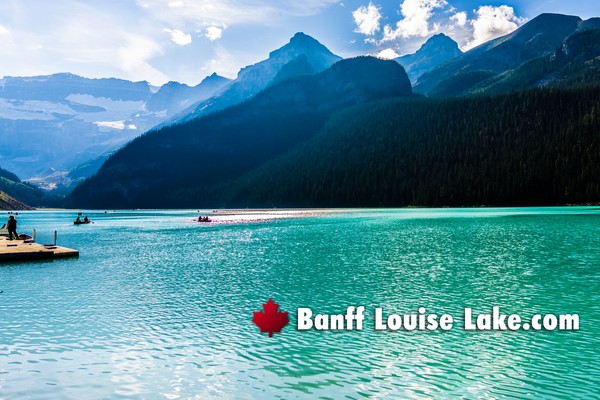
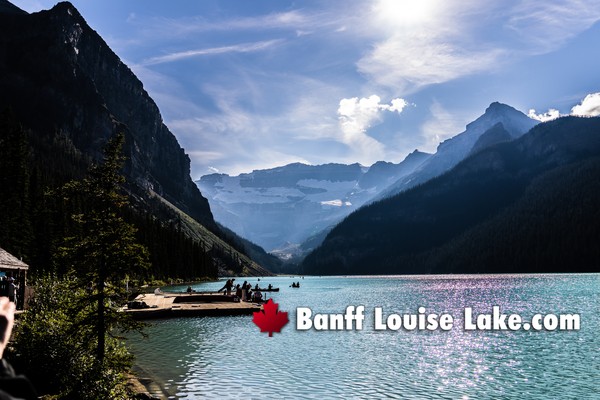
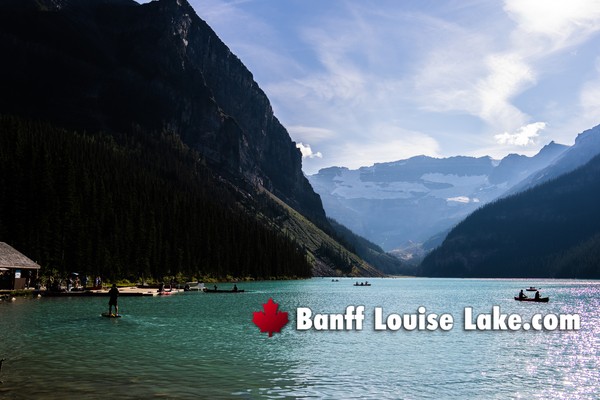
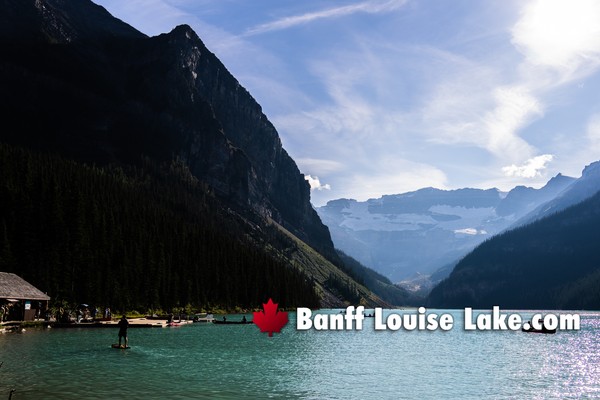
The lake occupies a glacial basin carved thousands of years ago during the last ice age. As glaciers advanced and retreated, they gouged out the valley and left behind natural dams of rock and sediment. Meltwater from surrounding glaciers continues to feed the lake today, carrying fine rock particles that give Lake Louise its distinctive turquoise color in warmer months.
While human infrastructure now exists around the shoreline-such as roads, paths, and buildings-the lake itself has not been artificially created, dammed, or engineered. Its shape, depth, and water source are entirely the result of natural glacial and alpine processes.
Book Banff Lake LouiseBooking the Canadian Rockies includes All taxes, fees and handling charges.
 Banff Lake Louise


 Absolutely stunning!!! Winter wonderland.